
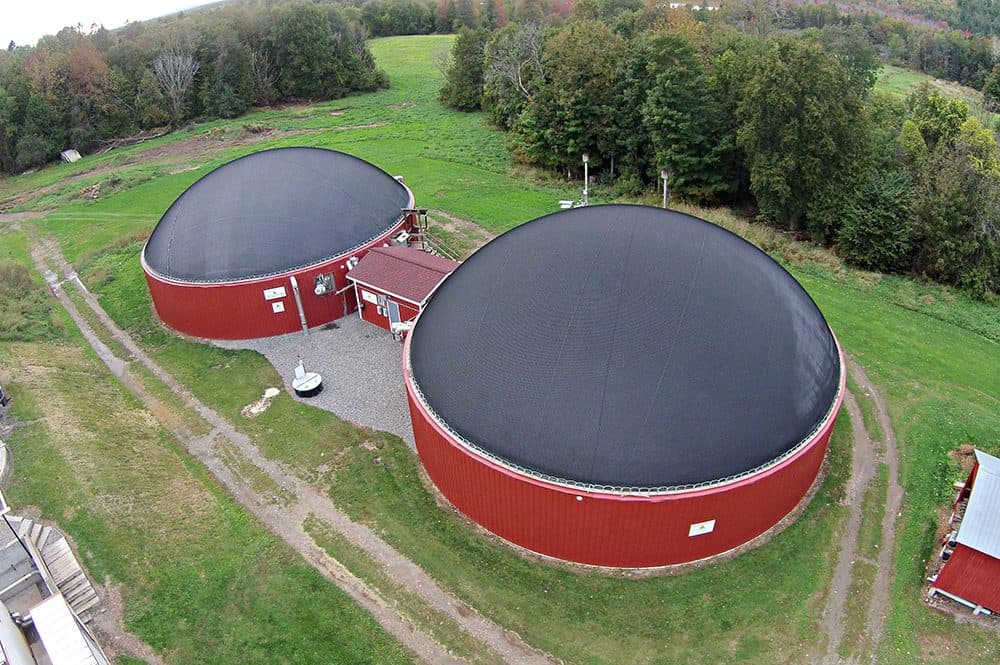
What is anaerobic digestion?
Anaerobic digestion is even greener than composting food waste — because it completely eliminates harmful greenhouse gases from the atmosphere.
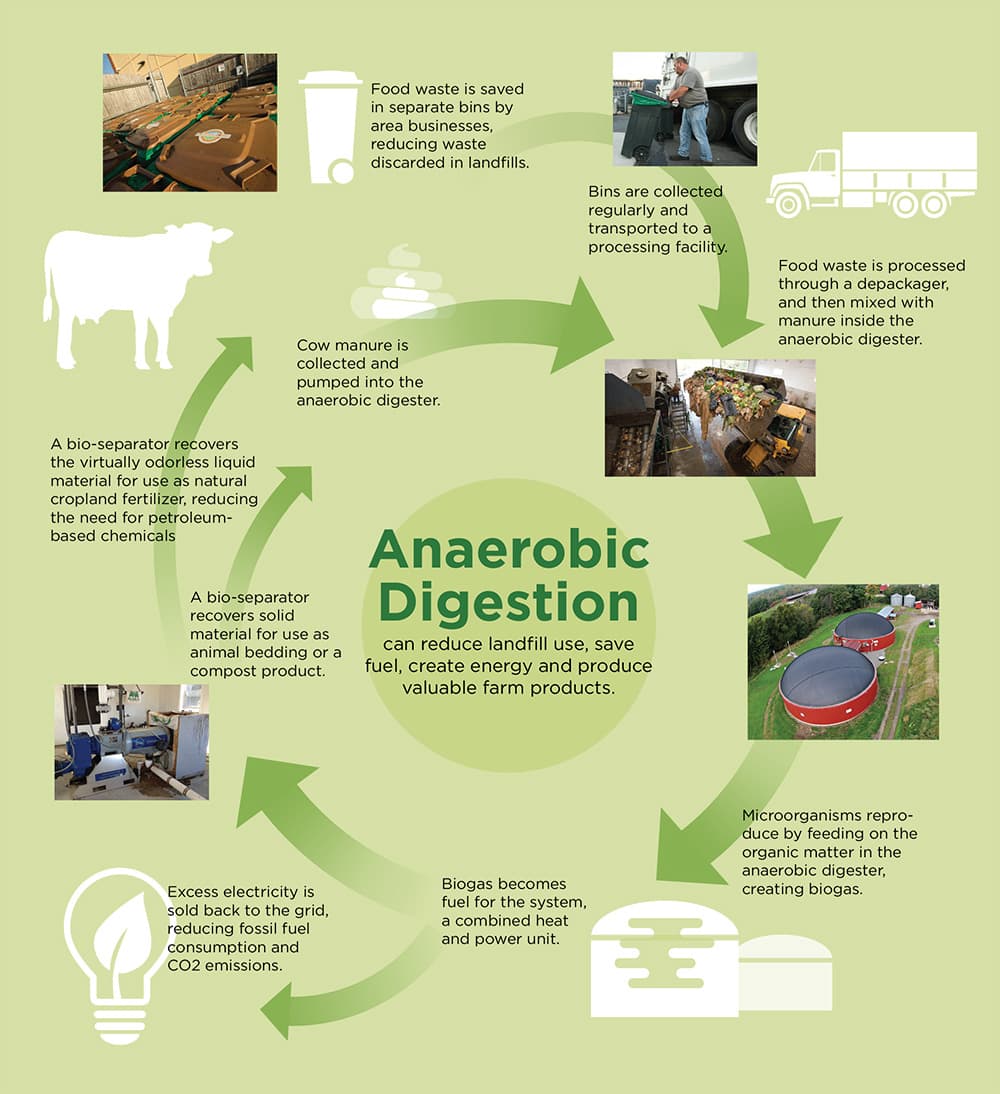
Food, full circle
Nothing we collect goes to a landfill or an incinerator. Follow a load of scraps around the loop — tap any stage to see what happens.
Wasted food
Stage 1 / 7
Stage 01
Wasted food
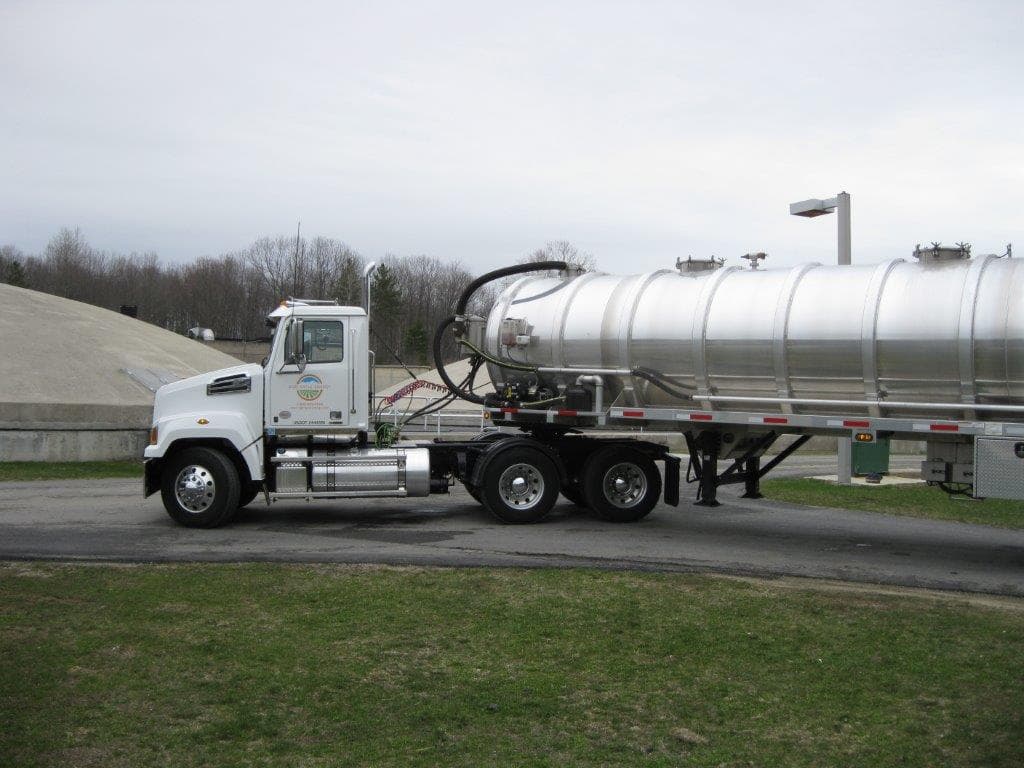
Produce, meat, seafood, dairy, brewery and industrial streams are collected from restaurants, grocers, brewers and institutions — packaged or loose.
Four useful products from one biological process
Electricity
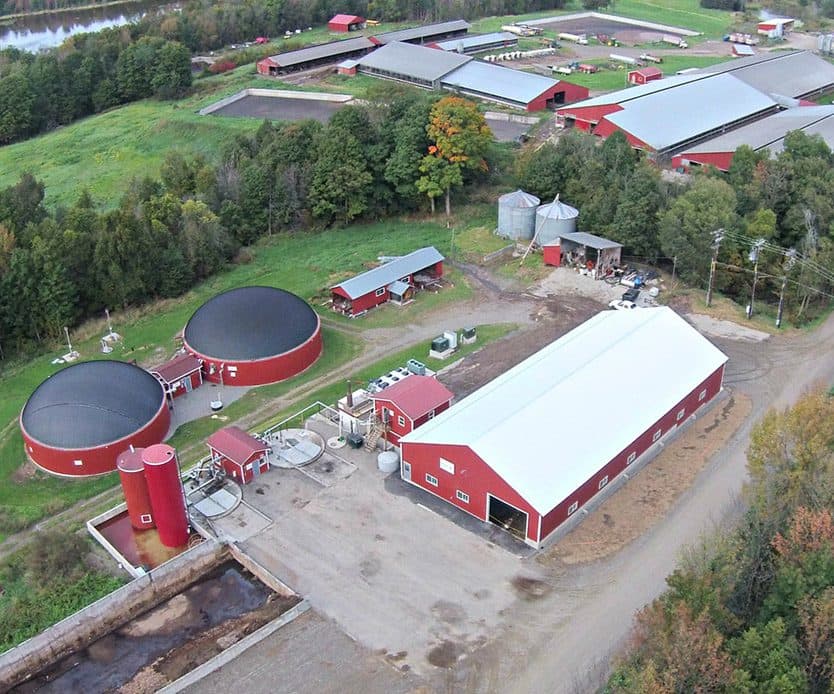
Captured biogas is combusted in combined heat and power units. Surplus power is distributed through the grid.
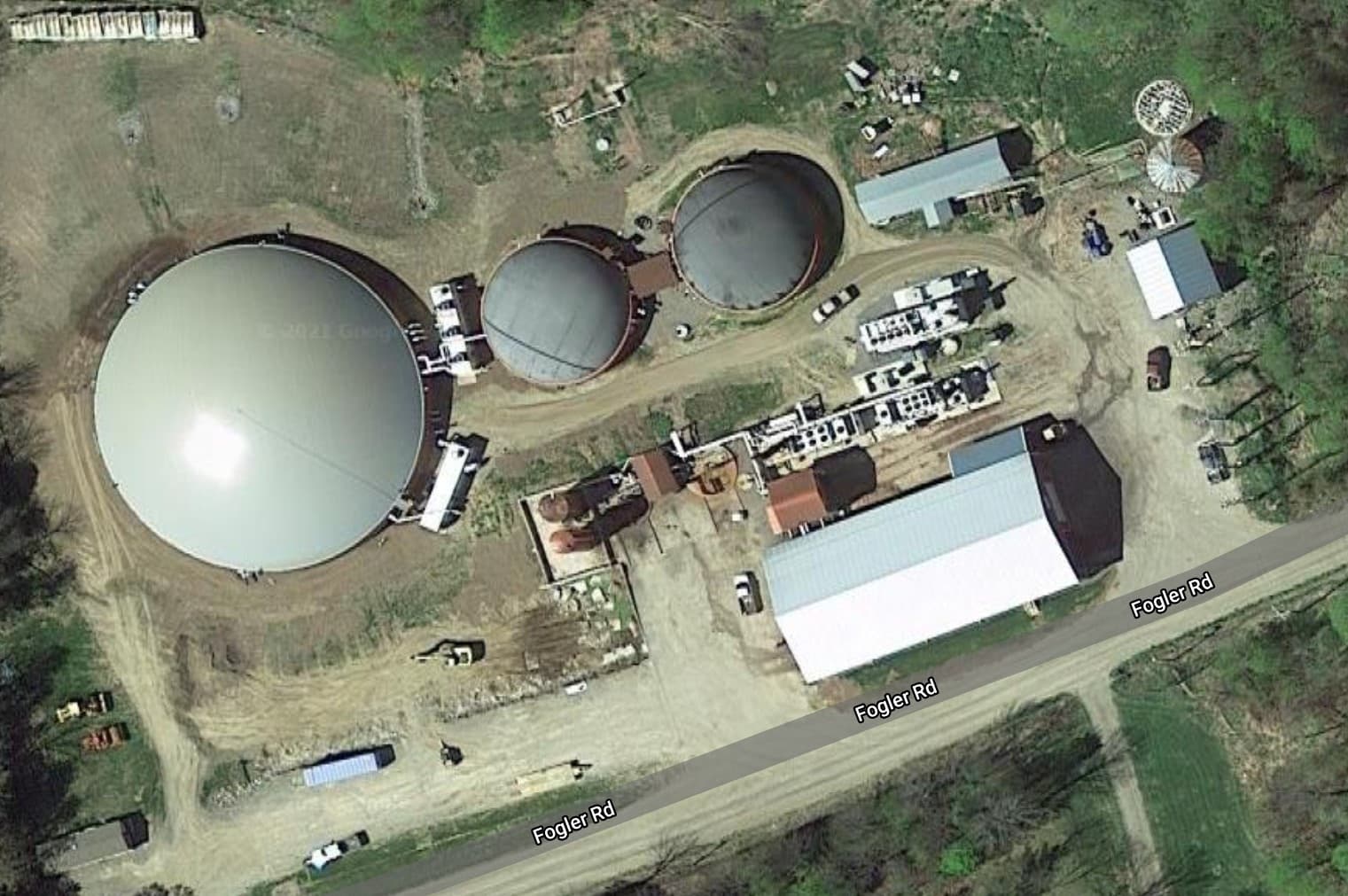
Heat
Waste heat from generation warms farm buildings and digester vessels — displacing thousands of gallons of heating oil.
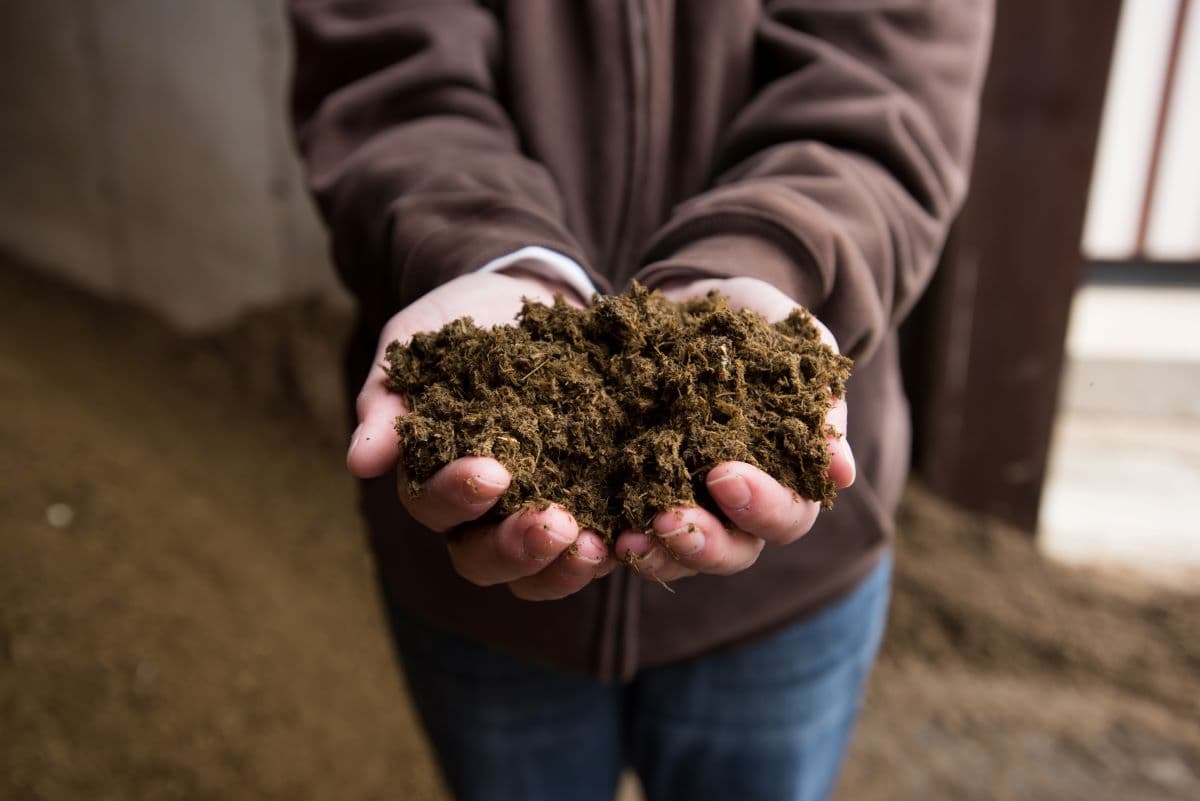
Fertilizer & bedding
Bio-separators recover liquid and solid digestate for use as rich fertilizer, soil amendment and animal bedding.
Renewable fuels
Biogas can also be upgraded into renewable natural gas and transportation fuels.
You've got the power.
Call us today to discuss how we can customize an efficient collection service to meet your specific needs.