
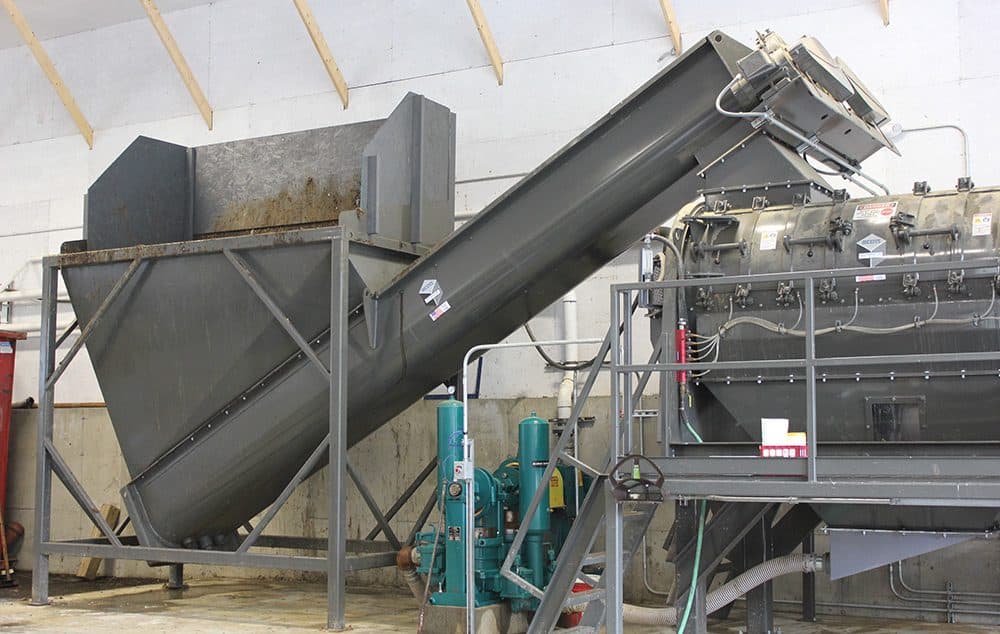
What does it mean to de-pack?
Paddles, blades and screens, working in unison
01
Tipping floor
A loader moves palletized and boxed food waste from the tipping floor into the intake trough.
02
Intake trough
Material is fed steadily into the machine, mixing packaged and loose product together.
03
Separator
Fans, paddles, blades and screens work in unison to strip organics from plastic, metal and cardboard.
04
Slurry out
The recovered food slurry is blended with cow manure and digested into renewable energy.
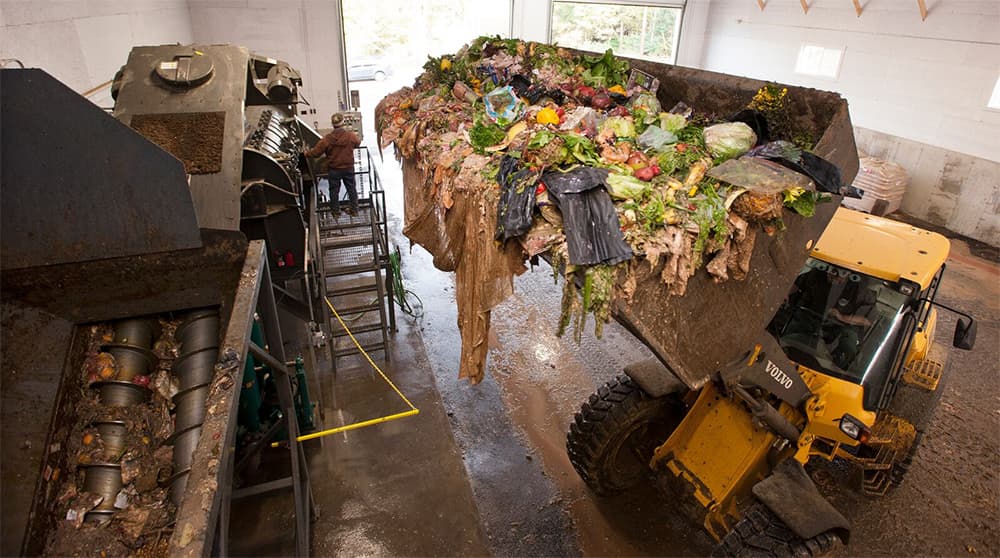
De-packaging isn't the solution for all occasions, but it is often the best option for large grocers and food distributors experiencing significant volumes of organics otherwise destined for a landfill or incinerator. In all other situations, we encourage source separation to the best of your staff's ability for a clean organic stream that can either be converted into renewable energy via anaerobic digestion or composted to support soil health.
Agri-Cycle relies on a variety of end uses to recover wasted food, including digestion to energy, composting to soil amendment, and animal feed.
Our state-of-the-art de-packaging machine was the first of its kind in the Northeast, and now many of our partner farm-based digesters are also using this technology. The de-pack is comprised of a network of paddles, blades, and screens that work in unison to separate expired or damaged packaged food from its plastic, metal, or cardboard containers. The resulting food waste slurry is then mixed with the cow manure and digested into renewable energy. This cutting-edge technology makes it possible to recycle expired or spoiled products that otherwise might end up in a landfill.
When possible, leave the de-pack option for the tough-to-separate items, and remove the food from its packaging and recycle that container. And it's always a good reminder that the less packaging we use in the first place results in less packaging that must be managed downstream. Reusable options are becoming increasingly more available, and we support using them as often as possible.
When to reach for the de-pack
It is often the best option for large grocers and food distributors experiencing significant volumes of organics otherwise destined for a landfill or incinerator. In all other situations, we encourage source separation for a clean organic stream.
Significant volumes of packaged organics?
We accept all damaged or expired packaged foods, including items in metal cans, plastic jugs and cardboard boxes — nationwide, on palletized routes.