The Announcement From MA DEP In October 2021 the Massachusetts DEP announced the state would be expanding its food waste ban. The current weekly threshold of compliance is 1 ton of food scraps or waste. In November 2022, the weekly threshold will be lowered to a half-ton. This will significantly expand the list of MA…
The Announcement From MA DEP
In October 2021 the Massachusetts DEP announced the state would be expanding its food waste ban. The current weekly threshold of compliance is 1 ton of food scraps or waste. In November 2022, the weekly threshold will be lowered to a half-ton. This will significantly expand the list of MA businesses that are “out of compliance”.
The amendment to the 2030 Solid Waste Master Plan reads as follows:
“Commercial Organic Material effective through October 30, 2022 means food material and vegetative material from any entity that generates more than one ton of those materials for solid waste disposal per week, but excludes material from a residence. Effective beginning November 1, 2022 commercial organic material means food material and vegetative material from any entity that generates more than one-half ton of those materials for solid waste disposal per week, but excludes material from a residence.”
Understanding the Hierarchy
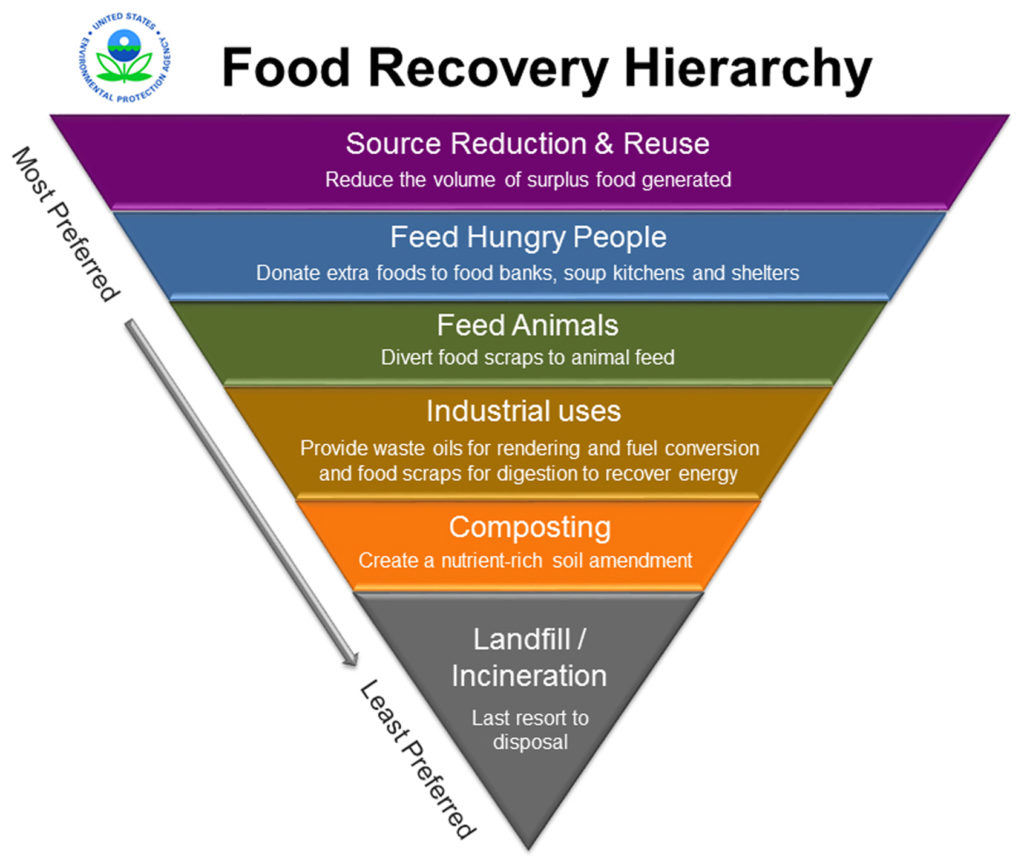
The Food Recovery Hierarchy below shows how commercial entities in Massachusetts must prioritize disposing of their food waste if they exceed the Food Waste Ban threshold of 1 ton (and .5 ton in November 2022).
- Source Reduction: Plan ahead and prevent! This is the cheapest and most sustainable practice! We help our partners to find best practices for reduction.
- Feed Hungry People: Connect with your local food rescue organizations, food banks, and soup kitchens. We work with TONS of these organizations. We’d be happy to connect you and work in tandem as a safety net.
- Feed Animals: If you have a local farmer, ask them if there are items that they want to accept from your food waste stream.
- Industrial Uses: This is us! Anaerobic Digestion is an emerging food recycling process that creates renewable energy, organic fertilizer, and compost. We can accept an extensive list of items, virtually ALL FOOD WASTE.
- Composting: Everyone’s familiar with composting! Great for soil and sequestering carbon. Our operation includes this process depending on the material!
- Landfill and Incineration: Otherwise known as “the garbage.” Keeping food waste or “scraps” out of the garbage reduces the amount of methane and other greenhouse gasses being produced, thus reducing climate change.